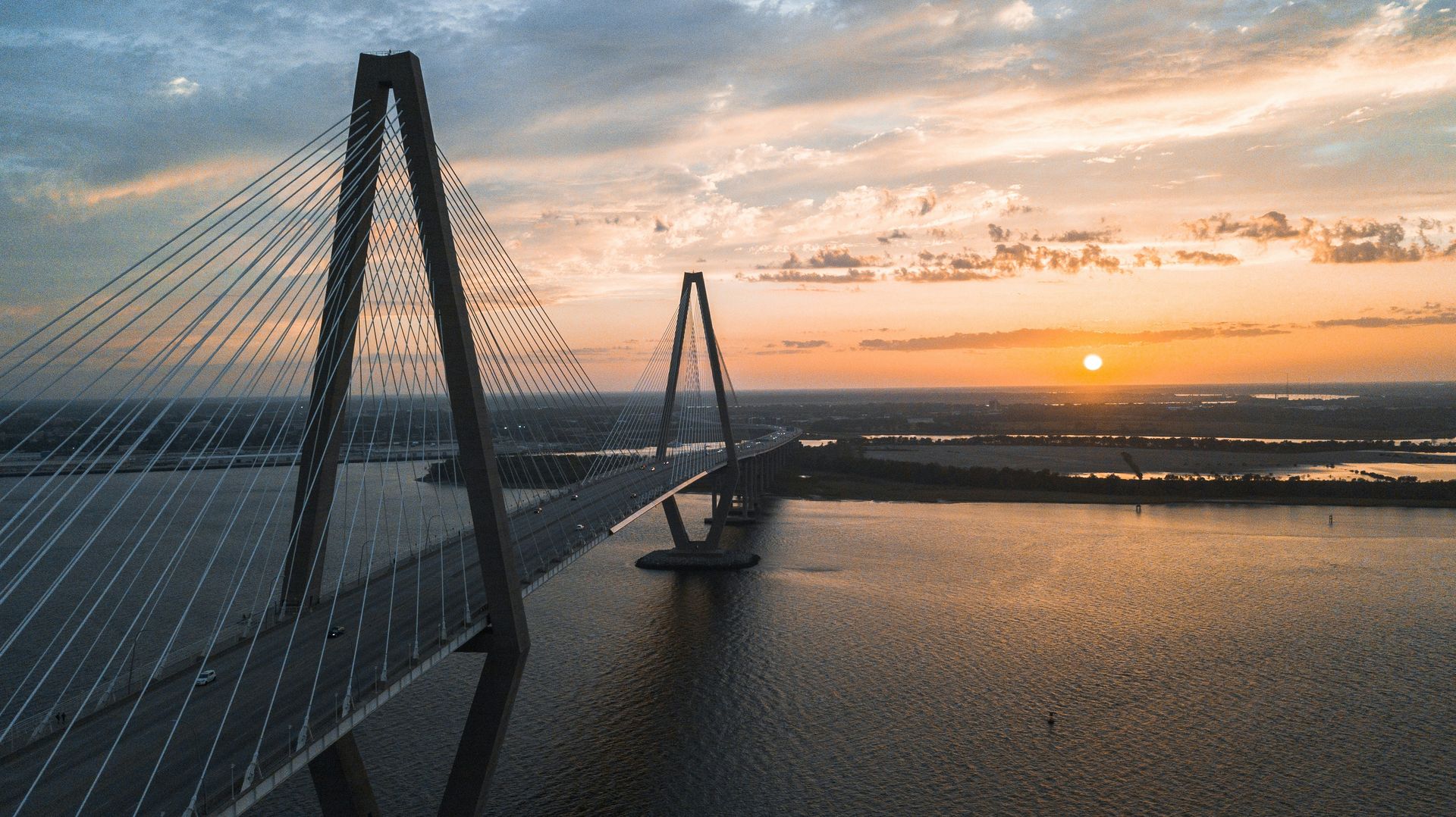
The oldest money in the Southeast, a barrier island that banned Airbnb, and the only invitation-only ocean club in the state, all within thirty minutes of each other.
The full guide, every community and its Southern Escapes Score, as a private PDF to keep, print, and mark up. Delivered by email.
Complimentary. Private list. Never resold. Skip the email, open the PDF.
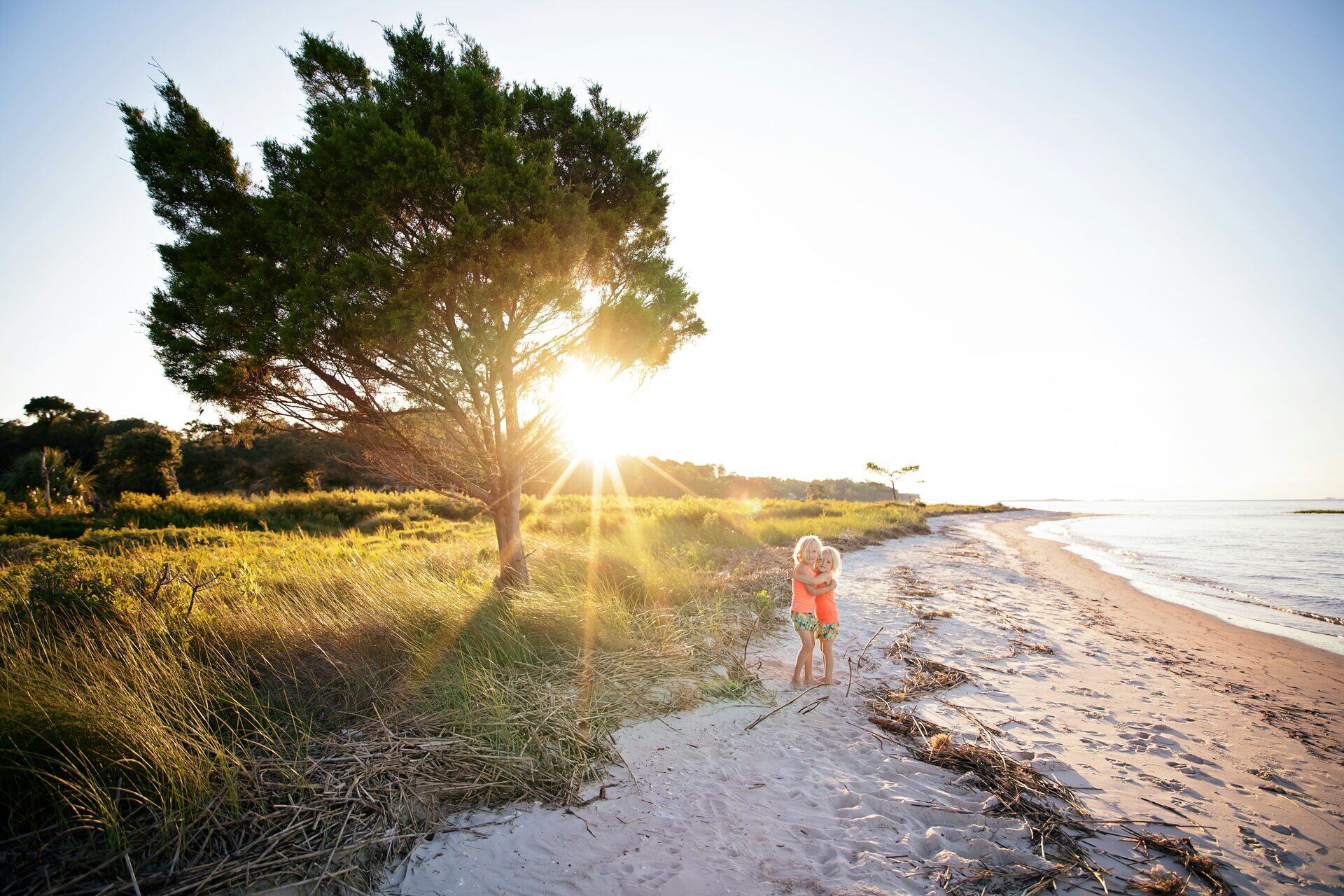
Sunrise on the beach path. The Lowcountry argument, made without a single number.
Greater Charleston is the Southeast's most internationally recognized luxury market, and its addresses are genuinely distinct: the historic peninsula, the barrier islands, the master-planned river town, and the established neighborhoods of Mount Pleasant. The constant the brochures skip is water risk. Flood and wind insurance is a real and rising line item here, and we flag it where it matters.
Charleston set its all-time residential record in 2025 with a $21.5M peninsula sale, and the ultra-luxury tier above $3M is busier than it has ever been. The right address depends on whether you want history, beach, a private club, or a town center, and how you feel about a bridge.
The oldest money address in the American South, a living museum where the city itself is the amenity.
South of Broad occupies the tip of the peninsula, from Broad Street down to the Battery, where narrow streets run under live oaks past antebellum single houses and the harbor sits at the end of the block. Life here is walkable in the old-city sense, with King Street dining, White Point Garden, and the Historic Charleston Foundation calendar all minutes away on foot. There is no private club; the city is the club.
Single-family homes run from roughly $2M into the teens, and 2025 brought three sales above $15M in the historic district, capped by a $21.5M record. The honest costs are flood insurance, which can run several thousand dollars a year on lower-elevation lots, plus heavy tourist foot traffic and the maintenance of very old bones. For a legacy buyer who wants the most prestigious address in the Southeast and the walkability to match, this is it.
The peninsula weekend: FIG books out four weeks ahead, the harbor sail does not.
Millers All Day on King for breakfast, then work the street in tiers: antiques on Lower King, M. Dumas and Candlefish in the middle, design rooms above Calhoun.
An afternoon sail on the Schooner Pride out of Aquarium Wharf: dolphins on the bow, the Battery from the water, which is how the city was meant to be seen first.
FIG if you claimed a table when reservations opened four weeks out; The Ordinary's raw bar when you did not. Husk and Chez Nous keep the bench deep.
South of Broad at dusk: gas lamps, garden gates, and the seawall promenade along the Battery.
The City Market's open-air sheds, sweetgrass baskets and all, then brunch before the bridge traffic wakes up.
The Hamptons of Charleston, a barrier island that banned short-term rentals in 2002 and kept its full-time soul.
Sullivan's Island is a small barrier island at the mouth of the harbor, fewer than two thousand residents, defined by elevated beach houses, a tiny Middle Street commercial strip, and Fort Moultrie at the western end. The short-term-rental ban, in place since 2002, is the reason the island feels like a neighborhood and not a resort: the beach is wide, uncrowded, and overwhelmingly owner-occupied. Twenty minutes to downtown over the Ben Sawyer Bridge.
The market is thin and pricey, with a median list near $6M and a wide range from rare smaller homes to oceanfront estates above $16M. Costs are real: combined wind and flood premiums can run well into five figures on a seven-figure home, and a 2026 court ruling on fractional ownership has put a question mark over the rental rules. For a buyer who wants a real beach address with full-time character and no Airbnb churn, the island has no equal.
A beach town that never surrendered to the T-shirt shop.
Breakfast burritos and coffee from The Co-Op on Middle Street, then a long walk up the beach from the station streets, no boardwalk, no towers, no hurry.
Fort Moultrie at the island's end: the fort that turned the British away in 1776, kept by the Park Service with a proper museum.
The Obstinate Daughter for dinner, the island's serious kitchen; Poe's Tavern below the oaks for the burger-and-fish-tacos night.
The Co-Op's famous frose while the afternoon goes soft. It is not optional in July.
The Longboard's weekend brunch, ten to three, then over the causeway past the Pitt Street Bridge before the beach traffic forms.
South Carolina's only truly elite oceanfront resort community, the Ocean Course address for people who mean it.
Kiawah is a ten-thousand-acre barrier island twenty-five miles southwest of Charleston, with ten miles of Atlantic beach and a deliberately nature-forward setting of marsh, palmetto, and wildlife. The Ocean Course, a Pete Dye design that hosted the 2021 PGA Championship and the 2012 Ryder Cup, headlines five courses, and the invitation-only Kiawah Island Club reaches a beach club, spa, and the member-only Cassique and River courses. The Sanctuary hotel anchors a five-star resort layer few communities can match.
The island median sits around $4.5M, with Club-community homes from $1.5M into the teens and oceanfront estates above $10M; 2025 was the third-highest sales year on record. The trades are distance and water. It is genuinely remote, forty-five minutes to an hour from downtown, the Club is by invitation with a six-figure buy-in on top of the real estate, and beach erosion at the east end is a documented and worsening issue. For a buyer who wants the most prestigious ocean address in the state, it is worth every mile.
The Ocean Course with a caddie, then a Sunday brunch that requires nothing of you.
The Ocean Course, ranked the country's number one resort course, walking with a caddie the way Pete Dye intended. The wind still outranks everyone.
Beachwalker Park at the island's west end, a perennial top-ten American beach, or a bike down ten miles of hard-packed sand.
Freshfields Village at the island crossroads: seventy shops, Indigo Books, and outdoor concerts on the green in season.
The Ocean Room at The Sanctuary, Forbes four stars, a thousand-label list, jackets encouraged and earned.
Jasmine Porch's Lowcountry brunch, she-crab soup non-negotiable, then a last beach walk before the causeway. Private-side buyers: the Fazio River Course and Watson's Cassique come with the membership conversation.
The only master-planned island town near Charleston with real urban amenities and a private club to match.
Daniel Island is a four-thousand-acre planned town between the Wando and Cooper rivers, with a genuine town center, a waterfront park, and a major ATP tennis stadium, all about fifteen to twenty minutes from downtown. The most upscale section, Daniel Island Park, surrounds the private Daniel Island Club and its two Rees Jones courses. It is the rare new-construction option at this price level, and a real draw for corporate relocators given the employers nearby.
The overall median runs around $1.8M, with single-family homes generally $1.6M to $2M and entry townhomes near $1.1M. The Club's golf membership carries a multi-year waitlist, and confirming current fees is worth doing. The trade is character: it is beautifully executed but planned and suburban, with no ocean and no historic fabric. For a family that wants turn-key luxury, a club, and a true town center, it is the most complete package in the region.
Two architects, one island, and a ferry that makes downtown a boat ride.
The Daniel Island Club's thirty-six: Fazio's Beresford Creek and Rees Jones' Ralston Creek, the only private club in the country holding signature courses from both.
The Daniel Island Ferry from River Landing Drive to the downtown waterfront, thirty minutes across the harbor. Take the sunset run home and skip the bridge entirely.
The Kingstide on the Wando, the island's only waterfront dining room, rooftop deck for the golden hour.
Mpishi for brunch, The Dime for coffee and provisions; both are why islanders stopped apologizing for not going downtown.
Credit One Stadium: WTA tennis every spring and a summer concert calendar that books names the arenas downtown envy.
Charleston's most architecturally intentional neighborhood, a New Urbanist village that actually delivers on the idea.
I'On is a two-hundred-forty-acre village in Mount Pleasant, designed in the late 1990s by Duany Plater-Zyberk, with canals, pocket parks, a town green, and a coherent mix of Charleston single-house and Craftsman architecture. Most homes are a five-minute walk from a town center with a wine bar and a couple of restaurants, and creekside docks and community lakes add a Lowcountry outdoor layer. It is ungated by design, ten minutes from downtown and fifteen from the Sullivan's Island beaches.
Homes typically run $1.2M to $5M-plus, with an average near $1.85M that has eased from its peak, making the entry friendlier than it was two years ago. There is no beach and no golf, and the architectural review is strict. For a design-conscious buyer who wants genuine walkability and proximity to both downtown and the beach without a barrier-island insurance bill, I'On is the best location value in the region.
The new-urbanist original, five minutes from Shem Creek's shrimp boats.
Coffee and a walk around I'On's lakes and lanes, then kayaks on Shem Creek with Coastal Expeditions: dolphins working the tide line, shrimp boats at the dock.
The Square Onion for a picnic lunch under the oaks on I'On Square, or the Pitt Street Bridge causeway for the water view without the crowd.
NICO on Shem Creek, wood-fired seafood from a French master chef, five minutes from the front porch.
Saint Urban's on Shelmore, the neighborhood's candlelit wine room. This is the amenity the brochure undersells.
Over the Ravenel Bridge for downtown brunch, or NICO's Sunday service when the bridge feels like effort.
The most authentic neighborhood outside the peninsula, waterfront, walkable, and chronically undersupplied.
Old Village is the original settlement of Mount Pleasant, predating the planned developments by centuries: pre-Civil War cottages and custom waterfront estates, the pedestrian Pitt Street Bridge, a Saturday farmers market, and harbor views from Alhambra Hall. It pairs historic character and water views with a safer flood profile than the peninsula or the barrier islands, ten minutes from downtown. Homes run roughly $900K to $3.5M-plus, with waterfront higher, against a Mount Pleasant median far below that.
Two other Mount Pleasant addresses round out the picture. Dunes West, the area's only twenty-four-hour guarded golf community, offers an Arthur Hills course and the broadest luxury inventory, with strong resale liquidity. Hobcaw Creek Plantation is the discreet, low-density choice for boaters who want deepwater docks and harbor access. Across all three, the location is the asset: bridge access to downtown, the Sullivan's Island beaches close by, and value that holds.
The Old Village: a pharmacy counter, a trolley causeway, and a tavern reborn.
Walk Pitt Street to the old trolley bridge, the village's promenade into the marsh, with Sullivan's Island across the water.
Pitt Street Pharmacy, operating since 1937: grilled pimento cheese and a hand-spun milkshake at the fountain. Some institutions survive because they should.
Alhambra Hall's waterfront lawn for the harbor view, or ten minutes to Sullivan's for the beach hours.
Post House on Pitt Street, the coastal tavern now under Indigo Road's care, with seven rooms upstairs for visiting family.
Post House brunch, then Patriots Point Links across the bridge approach, public golf with the harbor and Fort Sumter as the backdrop.
The weekly letter behind these scores: the markets, the residences, and the slower returns of moving to the Southeast. Three minutes, read with a coffee.
Welcome aboard. Check your inbox for the welcome note; the next letter lands soon.
Complimentary. Unsubscribe in a click. We do not share the list.
Before you tour a single home, an Advisory Conversation tells you which of these communities actually fits the life you are trying to build, and what the move is worth under the new Carolina tax math.